DaX Population Health Data Platform
De-identified, aggregated health data across entire populations. Risk stratification, comorbidity analysis, geographic disease distribution, and clinical decision support for doctors, corporates, and government.
The data layer that turns screening into population health visibility
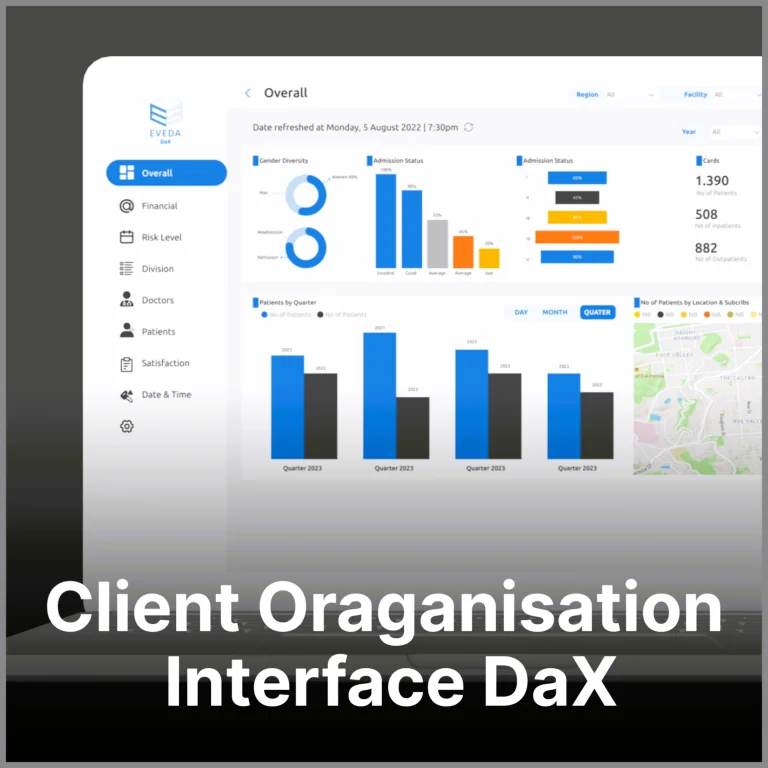
DaX processes de-identified screening data from every HubX deployment and presents it as actionable dashboards for clinicians, organisations, and health ministries. Three core capabilities work together: risk stratification, comorbidity analysis, and geographic health mapping.
Risk stratification
Stratify screened populations by general health risk, cardiovascular risk, pulmonary risk, nephrotic risk, and stress-related risk. Identify high risk cohorts and prioritise interventions before conditions escalate.
Comorbidity detection
Deductive analysis identifies comorbidity patterns across cardiovascular, diabetic, kidney, liver, metabolic, and obesity-related conditions. Alerts flag individuals and cohorts with multiple overlapping risk factors.
Geographic disease distribution
Map health data by region, site, department, or community. Understand where disease burden concentrates and allocate resources accordingly. Dashboard views by state, city, and facility.
Clinical decision support
Provide doctors with comorbidity alerts, risk scores, and disease progression data to support treatment decisions. Therapeutic area indexing across all screened organ systems.
Demographic dashboards
Customisable breakdowns by age, gender, occupation, location, and other parameters. Story boards present health data visually for board reporting, government submissions, and program reviews.
Trend tracking and program effectiveness
Monitor health metrics across multiple screening rounds. Measure the impact of wellness initiatives, health interventions, and chronic disease management programs with longitudinal before-and-after analysis.
De-identified by design. Always.
DAX operates exclusively on de-identified, aggregated data. Individual patient records are never accessible through the analytics platform. Organisations see population trends, never personal health information.
This separation is fundamental to the EVEDA architecture, not an afterthought. It enables honest workforce health insights without creating a surveillance tool.
Data governance principles
- All analytics operate on de-identified data only
- Individual records inaccessible through DAX
- Aggregation thresholds prevent re-identification
- Role-based access controls and audit trails
- ISO 27001 certified security management
- Australian Privacy Act aligned
- Small-cohort suppression, groups too small to stay anonymous return “insufficient cohort,” never data
- Corporate wellbeing, personal results follow the person; the organisation sees aggregate insight only
Identifiable data never leaves OpX
DaX sits at the end of the EVEDA data pipeline. Screening is captured on the HubX device, identifiable clinical records live in the OpX clinical platform, and only de-identified, aggregated data ever crosses the boundary into DaX for analytics.
That separation is architectural, not a setting, so organisations get honest population insight without DaX ever being able to surface an individual.
The EVEDA data pipeline
- HubX, point of care screening capture
- OpX, identifiable clinical record (data stays here)
- De-identification boundary, aggregates only
- DaX, population analytics & reporting
Common questions about DaX
Can DaX identify an individual?
No. DaX operates only on de-identified, aggregated data, individual records are not accessible through the platform.
Where does the data live?
Identifiable clinical data stays in OpX on Australian sovereign hosting. DaX receives de-identified aggregates only.
What prevents re-identification?
Small cohorts are suppressed: if a group is too small to stay anonymous, DaX returns “insufficient cohort” rather than data.
Who can access it?
Role-based access with audit trails, under ISO 27001 security management and Australian Privacy Act alignment.
Corporate wellbeing, who owns what?
Personal results follow the person. The organisation sees aggregate program insight only, never an individual’s data.
How do we start?
Request a dashboard preview using sample de-identified data and see what your screening data can reveal.